


Tools Primary school
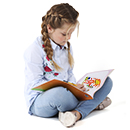
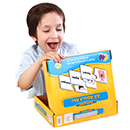
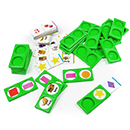
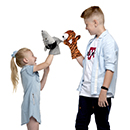
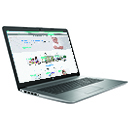
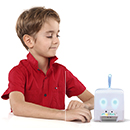

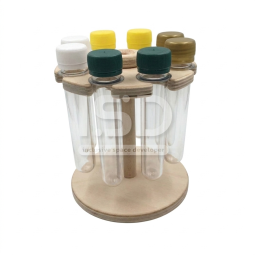
"Aroma-Praxis" Premium Multi-Sensory Laboratory Carousel is an institutional-grade sensory-motor int..
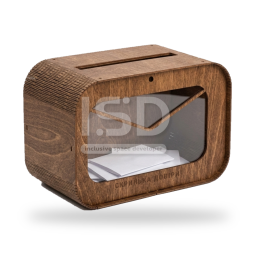
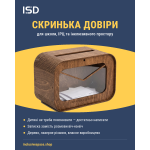
A wooden box for written messages in a school, inclusive resource centre or counsellor'soffice. A ch..
Didactic teaching aids
The new Ukrainian school is the first step towards correct changes in the principles and approaches to schooling. The main goal of creating NUSH is to provide students not only with the knowledge necessary for life, but also to teach them how to apply it in everyday life. It is a pleasure to study in such a school, because here they will listen to their opinion, teach them to think critically in any situation, express their own opinion and be responsible for their actions. The school closely interacts not only with children, but also with their parents, planning cooperation and mutual understanding.
Due to the fact that it is simply impossible to completely abandon the old educational system at one moment, the National Educational System is gradually being implemented throughout Ukraine. The new standards, which are provided for in NUSH, train teachers to work according to new approaches, undergoing online training and consolidating acquired skills in practice.
A key change for students involves new learning methods and educational content. Teaching aids for NUS include didactic material that will help teachers in explaining the topic of the lesson. Students will acquire skills instead of memorizing facts and concepts. This is a dynamic combination of knowledge, abilities, skills, way of thinking, thoughts, values and other personal qualities that determine a person's ability to successfully socialize, carry out professional and further educational activities.
The main skills include:
- fluency in the state language;
- the ability to communicate in both native and foreign languages;
- mathematical awareness;
- ability in the field of natural sciences, engineering and technology;
- innovativeness;
- environmental awareness;
- information and communication awareness;
- lifelong learning;
- civic and social awareness;
- cultural awareness;
- entrepreneurship and financial literacy.
Common to all abilities are the so-called cross-domain skills: reading comprehension, the ability to express personal thoughts orally and in writing, critical and systematic thinking, the ability to logically justify a position, creativity, initiative and the ability to constructively manage emotions, the ability to assess risks, make decisions, solve problems , cooperate with others.
Didactic materials are recommended by NUS for better assimilation of educational materials
Educational didactic material of the New Ukrainian School is a special type of visual teaching aid that can be used in class or at home. It is recommended to use them for better understanding and assimilation of educational materials. Teachers can use the textbook to demonstrate it to the whole class, or students can have their own personal set of such didactic material for independent work with it.
The new Ukrainian school makes it mandatory to use didactic material in the educational process. The use of modern presentation materials in classes is one of the key components of the implementation of the NUS principle. Each class has visual aids not only for students, but also for teachers, the learning process is more effective and simple, because with the visual materials of NUS it is much easier to convey the necessary information to children. With such materials, you can easily demonstrate the material you need, using not only text, but also illustrations, graphics, and photos.
The new Ukrainian school is guided by the principles of modern didactics and says that educational materials should be visual, practical, attractive and provide space for creative use. The use of educational materials in the classroom for elementary school students is especially important because elementary school students are more likely to perceive visual and tactile information than abstract concepts. The essential difference between the New Ukrainian School and the previous philosophy of education is that children should learn through games. It is very important to maintain children's interest in games and adhere to the principles of individualization of each child. For this, various educational materials for the New Ukrainian School should be prepared. This will greatly increase the likelihood that each student will be able to understand the learning materials and will also keep students interested in what is happening during the course. If children are interested in the lesson, then they will have a pleasant experience and they will perceive learning as an exciting and fun process, and not as something difficult and uninteresting. This approach will awaken children's thirst for learning and form lifelong learning skills.
NUSH in primary school forms children's all-round development, talents, abilities, values, development of independence, creativity, inquisitiveness, competences and diverse skills that will correspond to age norms and individual psychological features and needs. Educational tools of NUSH should be interesting and not harm children, therefore the materials from which these devices are made are mostly safe and natural.
The basic skills that a child should have under the new system are developed with the help of all other educational branches. One can cite an example of free expression of one's thoughts, so the development of this skill occurs not only at the expense of language and literature, but also with the use of natural, social, artistic and mathematical. This approach will be easier for teachers to implement with universal didactic material. Using familiar equipment, it will be easier for children to solve all other tasks. Children will have good experience and will be more open to different approaches, and will not be afraid to use non-standard methods to achieve any goals.
Didactic material for children with special needs is simply necessary at NUS in order to ensure maximum comfort for them. At the present time, children with special needs have a desire to study in regular schools more and more often, so the educational institution must take care of them. Their non-standard thinking and imagination teaches the teacher not to single them out, but on the contrary to support and help when needed.
Possibilities of using teaching aids in primary school
The principles used in the National University of Science and Technology provide teachers with a wide range of tools in didactics. With their help, teachers, taking into account the needs and abilities of students, can adjust the methods and methods of teaching and conveying the necessary information. The use of didactic materials and their possibilities depends only on the imagination of the teacher and the needs of the students. To master complex and unclear topics, the teacher can devote more time to them, while using non-standard comparisons or associations with the chosen subject or topic, so children learn faster and remember the information presented for a long time. Educational tools for NUSH show children not only how they can be used to explain various topics of the lesson, but also allow them to fantasize and fully reveal the potential of each student.
In order to provide each class with the didactic material necessary for learning, it is necessary to conduct tenders in time, which allow to buy didactic materials for the primary school before the beginning of the school year. Teachers will have the opportunity to properly plan their work and direct the educational process in the right direction with the game format. The teacher will have enough time to develop or choose individual teaching methods for maximum coordinated and productive work in the classroom.
Each teacher can independently choose the necessary didactic materials for elementary school for his students. The teacher has the opportunity to act within the program using comfortable and effective tools to achieve the highest result. The Order of the Ministry of Education and Culture No. 137 dated February 13, 2018 provides a list of necessary didactic materials, which is submitted separately for each educational field with general-purpose equipment.
The given list is not mandatory and allows teachers to individually select the necessary materials for their classes, so didactic teaching aids may be completely or partially different in the classes of even the same school. The teacher will be able to explain the topic of the lesson in different ways and help to retain the educational material in memory for a longer time. Even if the didactic materials in each class coincide in composition, they most likely differ in size, color and material, this will allow the child to pay attention in class and think creatively.
Teachers can exchange the purchased visual material so that the child concentrates more on the lesson. The exchange of such materials will make it possible to introduce an interesting note during the lessons. In addition, with this approach, children will not focus on already familiar subjects and will give them the opportunity to form a general idea of the terms or concepts presented in the lessons. This will make it possible to have a broad base of visibility in NUS.
In order not to overload the children, it is not necessary to frequently change the didactic means of learning, give the children the opportunity to get used to a certain set of subjects, and when they start to get distracted from the topic of the lesson, you should replace it with another one. Each teacher should follow the achievements of his students and, if necessary, change the approach to presenting the material or the form of interaction with children. When a teacher notices the good performance of his class over a period of time, it is not recommended to drastically change the visual material, because it is he who has interested the children and helps them better cope with the tasks. The main teaching aids of the modern school include only those subjects that can fully help in conducting the lesson and effortlessly explain its topic.
The use of didactic materials in lessons allows the child to develop non-standard thinking, the ability to draw conclusions, learn to argue their opinions
The age of 5-7 years is precisely the turning point when the child reaches a new stage in his development. Children at this age are physically, psychologically, socially and creatively ready for systematic learning, and have a much broader understanding of the environment. The priority task of education in the primary grades of NUS is the development and formation of basic skills, such as observation, critical thinking, responsibility, perseverance, achievement of the set goal, desire for knowledge, and others. Teaching aids for the 1st grade of NUSh should be used in every lesson so that the child gets used to something new and learns in parallel with the game process.
For the rapid formation of such skills and to ensure an easy transition of children to a new environment, NUS recommends conducting classes in the younger grades in the format of a game. With this approach, the child not only learns new information better, but also better adapts to changes in the daily routine. According to this principle, the New Ukrainian School creates a continuous process of child development and reduces the likelihood of stressful situations that may appear at any educational stage.
By supporting the game form of the lesson with the use of didactic materials, the teacher not only increases the educational achievements of his pupils, but also involves students to work in pairs, supporting communication. Teaching aids and equipment for NUS should be comfortable and convenient to use. This form of the educational process allows children to feel free and participate in the educational process as much as possible.
The assessment system in 1st and 2nd grade reflects verbally and formally. Verbal evaluation reveals the teacher's attitude to the work performed, and formal, in turn, its characteristics that influenced the perception of this work. However, already in the 3rd and 4th grade, formal and summative (assigning a grade for the work) assessment is used. It is this approach that makes it possible to soften and create comfortable conditions for preparing children to study in secondary school.
The main task of the school and teachers is to organize a favorable environment for both learning and recreation. The use of didactic teaching aids in lessons allows the child to develop non-standard thinking, the ability to draw conclusions, learn to argue their opinions and allows creative self-expression. Teaching aids and equipment for NUS should attract children to memorize new information. During the break, children will be able to easily repeat the material they have learned by playing with such devices. Also, at the beginning of the lesson, the teacher can involve children in using didactic materials to repeat and consolidate the material that was in the previous lesson.
Educational tools from ISD Shop - modern, innovative, interesting
Visual teaching aids at NUS are the key to student development and involvement in the educational process. Modern methods with bright and interesting elements will make the lesson more natural for children's perception and will effectively influence mental activity in the right direction. For a child, school will become a place where he will go with pleasure, and the educational process will be fun and informative at the same time.
It is in the primary grades that the school lays a reliable foundation for the further development of the child, and encourages the acquisition of knowledge and its improvement. Visualization, which is used by NUS when conducting classes, contributes to the mastery of concepts that are the basis, forms the necessary skills and competencies. Teaching aids in primary school form a child's spatial perception and help to concentrate.
Didactic material for children with special needs will help them feel comfortable and not different from others. With the help of such educational material, the teacher can explain the material to both ordinary children and children with special abilities. In this way, children do not feel separate from others, do not close themselves off and learn to maintain friendships.
By using diverse didactic material, school lessons cease to be boring and uninteresting, but on the contrary become easy, informative and exciting. In order to make it even more interesting for students to learn, it is recommended to develop a lesson plan in advance and to think about what equipment can be used during the lesson. Learning tools in elementary school help to more easily perceive new things and apply these skills in the future.
How and where to buy teaching aids in primary school
In the ISD Shop catalog, you can choose and buy all the necessary didactic material, furniture and equipment, programs for interesting, effective and convenient learning for younger classes. You can buy educational materials for elementary school on our website, by looking at the catalog or by calling the number, and we will guide you in the right direction and help equip your room, regardless of its size. We have all the necessary didactic materials of the National Academy of Sciences - for computer science, mathematics, English, Ukrainian, natural sciences, technology, and art. You can choose it according to your needs in different variations and provide yourself with comfortable appliances. Buying didactic material for NUSH is a necessity, not a requirement, so that children can get the necessary knowledge on easy examples and in order to connect ordinary children and children with special opportunities.
We can turn your dreams into reality. ISD Shop offers many options for equipping your premises and providing everything necessary for the educational process.
ISD Shop offers many options of didactic material of NUS and provides everything necessary for the educational process
